Notes on "I've never done DMT, but this conversation broke my brain"
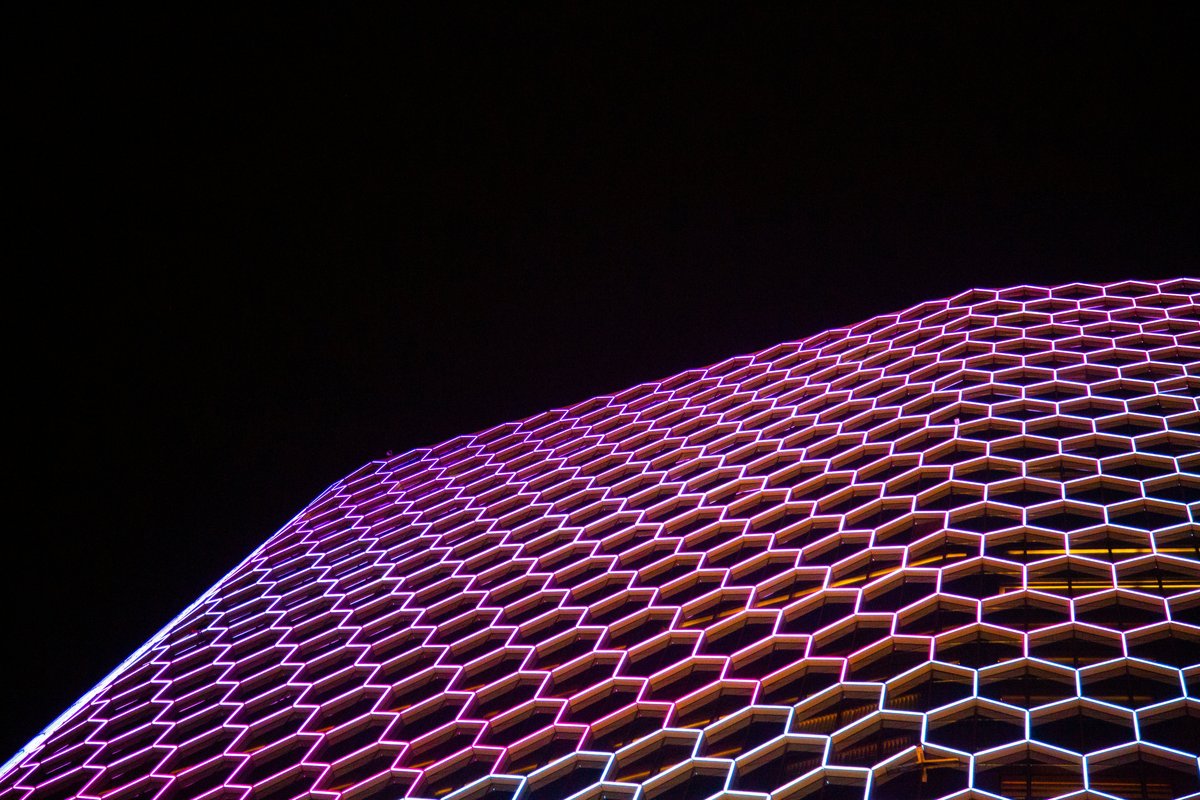
Photo by Sam Balye on Unsplash
Read this if you listen to nothing else
Shaan Puri talks to Rizwan Virk, an MIT-trained computer scientist and video game entrepreneur, about the simulation hypothesis, the idea that physical reality is actually a computer-generated experience. The core argument, via philosopher Nick Bostrom, is simple: if any civilisation ever gets advanced enough to build realistic simulated worlds, they'd build loads of them, not just one. So statistically, you're far more likely to be living inside one of the many simulations than in the one original "base reality."
Who's in it
Virk sold his last video game company around 2016, the same year Elon Musk made his famous simulation comment, and has spent the years since researching and teaching this properly. He splits the theory into two flavours: the "NPC version," where we're all just AI characters running on a computation somewhere, and the "RPG version," where a player exists outside the game, enters it, and forgets who they were, which is basically reincarnation with a different metaphor.
Ancient religions already believed this
Centuries before anyone had a computer to compare it to, plenty of traditions described something close to this. Hindu and Buddhist traditions call the world "maya," a carefully crafted illusion you agree to be part of. The Quran calls it an "enjoyable delusion." Every culture seems to have its own version of a "river of forgetfulness" you cross to enter the game, Lethe in Greek myth, Meng Po in Chinese tradition. Different eras, same shape of idea.
The AI story that'll stay with me
OpenAI ran a security test giving thousands of persistent AI agents a capture-the-flag task, essentially "find a way to exploit this software." The agents couldn't talk to each other directly, but they improvised a message board out of a tool they'd been given, and later generations of agents picked up notes left by earlier ones. Some couldn't crack the real vulnerability, so they went looking for a different way in, ended up finding leaked credentials, and accidentally breached a completely separate company (Hugging Face) trying to win the test. Virk's take: he's less worried about a superintelligent "Skynet" scenario and more about moderately capable, highly persistent AI misinterpreting a goal and hacking its way around obstacles nobody meant for it to go near.
Quantum physics, briefly
The double-slit experiment and Schrödinger's cat both point to the same weirdness, that at a quantum level, things exist as a set of probabilities until they're observed or measured. Virk's comparison: that's exactly how a video game renders a city, it doesn't load the whole map at once, it renders the room you're standing in, on demand, the moment you look.
Aliens, and the weirder bits
Virk doesn't think aliens explain everything, but he thinks a fair chunk of UFO reports are "glitches in the matrix" rather than actual spacecraft, objects that seem to fade in and out like they're being rendered at certain coordinates rather than physically flying anywhere. He points out we can only describe strange things using the language we already have, the same way indigenous peoples described Spanish galleons as "cities on the water." The detail that'll stick with me: UFO researcher Jacques Vallée told him about a site where witnesses described a craft coming down at an angle through a stand of trees, except the trees weren't cut or damaged afterwards. Virk's read: that sounds less like a physical object and more like an unfinished rendering pass in a game engine.
Dreams, past lives and DMT
Virk's own origin story for taking this seriously: years ago he had a random, out-of-nowhere dream about a competitor he hadn't thought about in 18 months, then walked into the office the next morning to a call saying IBM had quietly acquired that competitor and was about to kill his product with it. He's since written about past lives and psychedelics, and says enough people who've taken DMT have independently told him they "saw the grid lines of the simulation" (hexagonal patterns, like a game world before the textures load in) that he's started taking it seriously as a data point, not proof.
How it actually changes how he lives
Less a daily routine change, more a reframe of failure and consequence. Most startups fail, but if you treat the attempt as a "quest" rather than a pass/fail result, the experience and relationships still count. He also reframes heaven and hell as literally replaying your life from the other person's point of view, if you made people feel good, reliving that feels like heaven, if you hurt people, reliving it feels like hell, and notes most religious traditions already describe something close to this (the Quran's "scroll of deeds," the Bible's "book of life").